Rather than relying only on natural air movement, the fan actively draws hot, humid and stale air out through the roof when solar conditions allow. Heritage Plumbing Group installs solar roof ventilation systems across Melbourne for homes, sheds, workshops and commercial properties, with each installation planned around the roof layout, available intake air and the size of the area being ventilated.
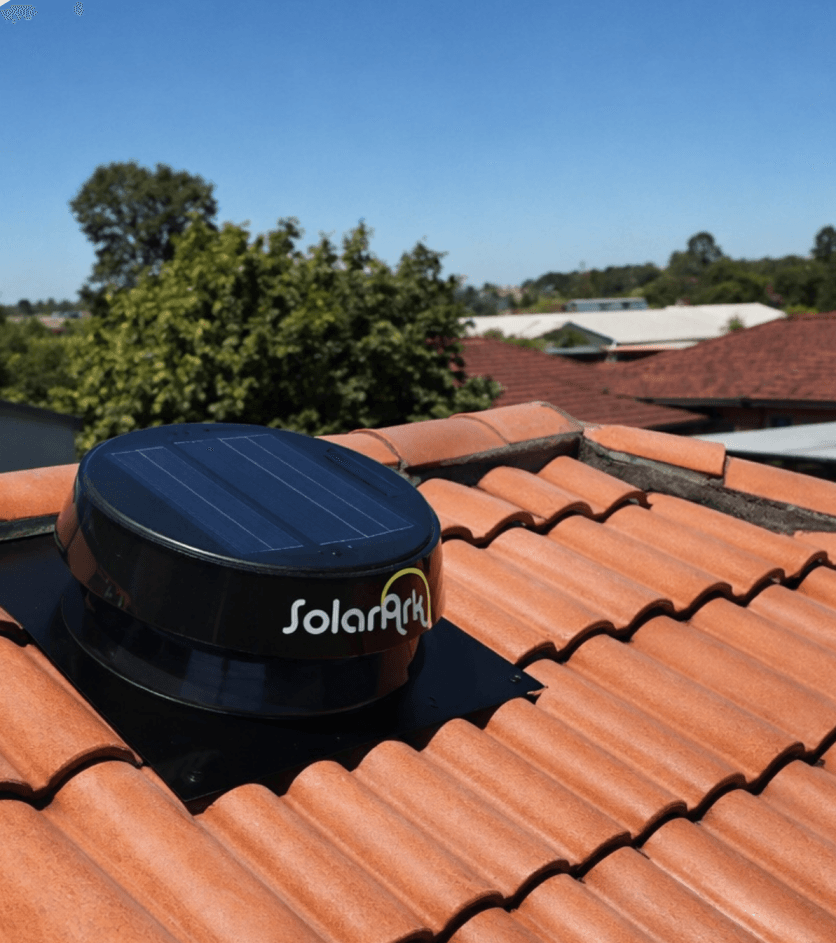
During warmer weather, roof spaces can hold a considerable amount of heat, particularly under metal roofing or on buildings with large roof areas exposed to the sun throughout the day. A solar roof vent can help remove some of that built-up heat by moving warm air outside and encouraging replacement air to enter through suitable lower ventilation points. This can make the roof space less stagnant and may also help reduce the amount of heat being held directly above the rooms below.
Solar ventilation can also be useful where moisture tends to collect in the roof space. Warm, humid air that becomes trapped around insulation, timber and roofing materials can contribute to condensation and damp conditions over time. Improving airflow gives that moisture a better chance to move out of the roof cavity rather than remaining enclosed.
The ventilation system still needs to be set up properly, because an extraction fan cannot work effectively if there is nowhere for replacement air to enter. When we assess a property, we look at the existing roof ventilation, eaves, openings, insulation and general roof layout before deciding where the solar vent should be positioned.
The location of the unit is important. Installing a solar vent wherever it happens to fit on the roof does not necessarily mean the whole roof space will benefit. Roof pitch, orientation, available sunlight, the shape of the roof and the areas where heat tends to collect can all influence the final position. On larger properties, more than one ventilation point may be needed, while a smaller roof may only require a single well-positioned unit. We look at the property as a whole rather than working from a standard number of vents for every building.
Solar roof vents differ from traditional Whirlybirds because they use a solar-powered fan to create active air movement. A Whirlybird relies on wind and natural air movement to turn the turbine, while a solar vent can actively extract air when the solar panel is receiving enough sunlight to operate the fan. Ridge vents work differently again, providing a passive high-level outlet along the ridge of the roof.
There is no single ventilation system that suits every building, so the right option depends on the roof design, the amount of ventilation required and how air can enter and leave the space.
One of the reasons people choose solar ventilation is that the fan is powered by solar energy rather than drawing power from the home’s normal electricity supply during operation. There is also no need for the spinning roof turbine used with a traditional Whirlybird.
Solar roof ventilation can be considered for both new and existing properties. It can be installed during a roof replacement or larger roofing project, or retrofitted to a suitable existing roof where access and layout allow. For older properties, we can also look at existing ventilation that may no longer be performing well or roof areas that become noticeably hot and stagnant.
Weatherproofing is a major part of the installation. A solar roof vent requires an opening through the roof, so the penetration needs to suit the roofing material and be properly incorporated into the surrounding sheets, tiles or flashing. Our roof plumbers consider the roof profile, drainage path and position of nearby flashings when installing the unit. Melbourne roofs deal with everything from strong sun to heavy rain, so a ventilation upgrade should never come at the expense of keeping the roof watertight.
Commercial buildings, workshops and sheds can have different requirements to residential homes because the roof area may be larger and internal heat loads can vary depending on how the building is used. These properties may need ventilation spread across more than one section of the roof rather than relying on a single extraction point.
Solar roof vents also need to be kept separate from dedicated bathroom, laundry, kitchen and commercial exhaust systems. A solar vent is designed to move air through the roof space itself. It does not replace correctly ducting exhaust air outdoors where a room or appliance requires its own dedicated ventilation. A property may have both roof-space ventilation and ducted exhaust ventilation working independently. If existing bathroom or laundry exhaust fans are terminating into the roof cavity, that should be considered separately rather than assuming a solar roof vent will solve the problem on its own.
Like any roof-mounted system, the vent and surrounding roof area should still be checked as part of normal roof maintenance to make sure the unit, flashing and ventilation openings remain in good condition.
Roof ventilation can play a useful part in improving airflow, but it needs to suit the building and the way the roof space is constructed. We do not recommend adding ventilation simply because a particular product is popular. Before carrying out the work, we look at what is happening in the roof, where air can enter, where heat or moisture is collecting and which ventilation method makes sense for the property.
For Melbourne homes and commercial buildings considering solar roof ventilation, our team can assess the existing roof and install a system that works with the layout of the building while keeping the roof properly weatherproofed.

Frequently Asked Questions
Rather than relying only on natural air movement, the fan actively draws hot, humid and stale air out through the roof when solar conditions allow.
One of the reasons people choose solar ventilation is that the fan is powered by solar energy rather than drawing power from the home’s normal electricity supply during operation.
Solar roof vents differ from traditional Whirlybirds because they use a solar-powered fan to create active air movement. A Whirlybird relies on wind and natural air movement to turn the turbine, while a solar vent can actively extract air when the solar panel is receiving enough sunlight to operate the fan.
Ridge vents work differently again, providing a passive high-level outlet along the ridge of the roof.
The location of the unit is important. Installing a solar vent wherever it happens to fit on the roof does not necessarily mean the whole roof space will benefit.
Roof pitch, orientation, available sunlight, the shape of the roof and the areas where heat tends to collect can all influence the final position.
On larger properties, more than one ventilation point may be needed, while a smaller roof may only require a single well-positioned unit. We look at the property as a whole rather than working from a standard number of vents for every building.
Solar roof ventilation can be considered for both new and existing properties. It can be installed during a roof replacement or larger roofing project, or retrofitted to a suitable existing roof where access and layout allow.
A solar vent is designed to move air through the roof space itself. It does not replace correctly ducting exhaust air outdoors where a room or appliance requires its own dedicated ventilation.
Commercial buildings, workshops and sheds can have different requirements to residential homes because the roof area may be larger and internal heat loads can vary depending on how the building is used. These properties may need ventilation spread across more than one section of the roof rather than relying on a single extraction point.


Get Started Today
Area we services
Need a reliable plumber near you? Heritage Plumbing Group offers expert solutions across Melbourne with fast response times and top-quality service.
Our licensed team brings decades of local expertise, ensuring efficient, long-lasting results for emergencies, maintenance, and major projects.
