Heritage Plumbing Group carries out planned roof maintenance across Melbourne for residential, commercial and industrial properties, with each visit based on the type of roof, its age, the surrounding environment and how the building is being used. A roof can look fine from ground level while still developing issues around flashings, penetrations, gutters, cappings, fixings or sections that are difficult to see without getting onto the roof. Regular inspections give us a chance to look over those areas, check how water is moving across the roof and identify anything that may need attention before the property owner first notices it from inside the building.
Maintenance can be particularly useful on metal roofs because corrosion, loose fixings, damaged sealants and movement around roof sheets or flashings can develop gradually. Melbourne weather can be hard on exposed roofing, especially where a building receives strong sun, wind, heavy rain or debris from nearby trees.
The maintenance required on one property may be quite different to another, which is why we do not work from a fixed checklist without considering what is actually on the roof. A smaller residential roof may only have a few gutters, penetrations and flashing details to inspect, while a commercial or industrial roof can have long sheet runs, box gutters, sumps, plant equipment, skylights, vents and several different roof levels that all need to be considered.
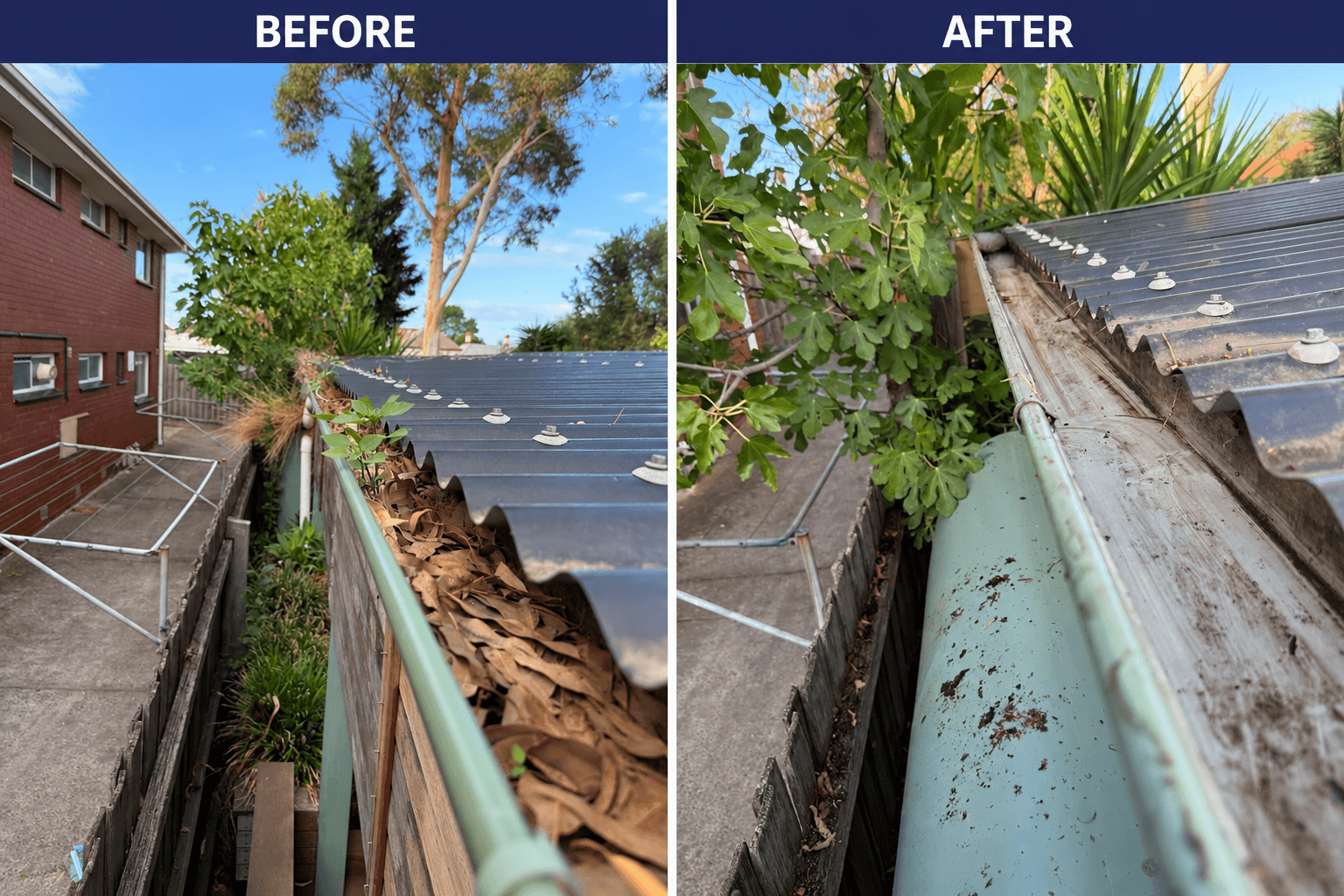
Gutters and drainage are an important part of scheduled roof maintenance because water still needs a clear path away from the building. Leaves, dirt and other debris can collect in gutters, downpipes, box gutters and around outlets, particularly on properties surrounded by trees or buildings where material is carried onto the roof by wind. When drainage becomes restricted, water can sit where it was not intended to or back up during heavier rain.
We check the visible condition of the drainage components and look for areas where debris, deterioration or previous repairs may be affecting the way water leaves the roof. Gutter and downpipe cleaning may form part of the maintenance required on properties where buildup is contributing to poor drainage.
Flashings also deserve regular attention because they protect many of the junctions and penetrations where water could otherwise enter the building. Wall junctions, parapets, skylights, roof vents, flues, ducts and other penetrations can all rely on flashing to keep the surrounding roof weatherproof. Over time, sealants can deteriorate, fixings can loosen and flashing can become damaged or corroded.
Roof flashing installation and repairs may be recommended where the existing detail is no longer doing its job properly, but not every flashing needs to be replaced just because maintenance is being carried out. We look at the condition of the existing work first and deal with the areas that actually need attention.
Roof penetrations are another part of the inspection because they are common locations for leaks to develop when flashings, seals or surrounding roofing begin to fail. Skylights, vents, exhaust outlets, access points and other services can all create openings through the roof that need to remain properly weatherproofed.
Maintenance gives us an opportunity to check the visible roof-side condition of these areas and look for signs of movement, corrosion or deterioration before water finds its way inside. Where there is an existing issue around a skylight or penetration, skylight and penetration repairs may be required separately from the normal maintenance visit.
Roof sheets and cappings can also change over time. Fixings may loosen, sheet edges can become damaged and exposed metal can begin to corrode in certain areas. Ridge cappings, barge details and other sheet-metal components need to remain secure and properly integrated with the surrounding roofing.
On older roofs, previous repairs may also be visible and worth checking to see whether they are still holding up. We do not assume that every older repair needs to be removed, but if something is deteriorating or allowing water through, it is better to identify it while the surrounding roof is still in reasonable condition.
Scheduled maintenance can be especially valuable for commercial and industrial properties because the roof area is often larger and there can be more equipment and services to work around. Warehouses, factories, workshops, schools, retail sites and other commercial buildings may have several roof levels, box gutters, plant platforms, exhaust outlets, skylights and drainage points spread across a large area.
Problems in these locations are not always obvious from inside the building until water has already travelled some distance. A planned maintenance program gives facility managers and property owners a clearer picture of the visible roof condition and allows repair work to be organised rather than waiting for a leak to dictate the timing.
Commercial and industrial metal roofing can also be exposed to heavier use around access paths, plant and service areas, especially where other contractors regularly work on the roof. Foot traffic, maintenance work and new equipment can sometimes disturb roofing components, flashings or seals without the problem being noticed immediately.
If other trades have recently been working on the roof, a maintenance inspection can help check the surrounding areas and make sure the roof-side plumbing components have not been damaged or left in a condition that could affect weatherproofing.
Residential properties benefit from the same basic approach, although the areas being checked may be different. Homes can develop problems around gutters, downpipes, valleys, chimneys, skylights, roof penetrations and changes in roof level. Properties with trees nearby may need more attention around drainage, while homes that have been extended or renovated can have several roof junctions where old and new work meet. A maintenance visit can help identify visible deterioration around those areas before it becomes a more noticeable internal problem.
There is no single maintenance interval that suits every roof. How often a property should be checked depends on the roof material, age, location, surrounding trees, the amount of plant or equipment on the roof and whether the building has had previous leak or drainage issues.
Commercial properties may choose scheduled inspections as part of their normal facility maintenance, while residential owners may arrange a roof check after a period of heavy weather, before larger renovation work or when they know the roof has not been looked at for some time. The important part is that the maintenance schedule makes sense for the property rather than being based on an arbitrary timeframe.
Preventative maintenance is also different from simply waiting for something to break. A roof leak can sometimes be traced to a small area, but by the time water is visible inside, the roof may already have been allowing moisture through for a while.
Checking the roof earlier gives us a better chance of finding visible signs such as loose flashing, deteriorated seals, corrosion, blocked drainage or damaged roofing before the issue reaches the ceiling below. It does not mean every inspection will uncover a major problem. In many cases, the value is in confirming what is in reasonable condition and identifying a few smaller items that can be dealt with as part of normal maintenance.
When repairs are required, we look at how the issue relates to the surrounding roof rather than treating every defect as an isolated spot. A damaged flashing may be affected by the way water is draining nearby. An overflowing gutter may be caused by debris, an outlet problem or something further along the drainage system. A leak around a penetration may involve the flashing, sealant, roof sheet or another nearby component.
Looking at the area as a whole helps avoid carrying out a quick patch that leaves the original cause in place. Roof plumbing and repairs may be recommended where the maintenance inspection identifies work that needs more than routine attention.
Scheduled roof maintenance can also be planned around other roofing work. If a property is already having gutters replaced, new ventilation installed, skylights repaired or sections of roofing upgraded, it can be a practical time to look over the surrounding roof and deal with maintenance items while access is already available.
The same applies before larger roof replacement work, where understanding the condition of the existing drainage, flashings and penetrations can help with planning the broader roofing project.
Our approach is straightforward. We inspect the accessible roof areas, look at the visible condition of the roofing and roof plumbing components, and identify anything that appears to need cleaning, repair, further investigation or monitoring.
Some properties only need routine maintenance and a few minor items attended to, while others may have older sections that are ready for more substantial repair work. We explain what we can see and keep the recommendations relevant to the roof in front of us.
For Melbourne homeowners, facility managers, businesses and property owners wanting a more planned approach to roof care, preventative and scheduled roof maintenance can help keep an eye on the parts of the roof that are exposed to weather all year round and give repair work a chance to be organised before a small issue becomes a larger one.

Frequently Asked Questions
Preventative and scheduled roof maintenance is about checking the roof before small problems turn into leaks, water damage or more involved repair work.
A roof can look fine from ground level while still developing issues around flashings, penetrations, gutters, cappings, fixings or sections that are difficult to see without getting onto the roof.
Gutters and drainage are an important part of scheduled roof maintenance because water still needs a clear path away from the building.
Flashings also deserve regular attention because they protect many of the junctions and penetrations where water could otherwise enter the building.
Maintenance gives us an opportunity to check the visible roof-side condition of these areas and look for signs of movement, corrosion or deterioration before water finds its way inside.
Scheduled maintenance can be especially valuable for commercial and industrial properties because the roof area is often larger and there can be more equipment and services to work around.
Residential properties benefit from the same basic approach, although the areas being checked may be different.
There is no single maintenance interval that suits every roof. How often a property should be checked depends on the roof material, age, location, surrounding trees, the amount of plant or equipment on the roof and whether the building has had previous leak or drainage issues.
Checking the roof earlier gives us a better chance of finding visible signs such as loose flashing, deteriorated seals, corrosion, blocked drainage or damaged roofing before the issue reaches the ceiling below.
Scheduled roof maintenance can also be planned around other roofing work. If a property is already having gutters replaced, new ventilation installed, skylights repaired or sections of roofing upgraded, it can be a practical time to look over the surrounding roof and deal with maintenance items while access is already available.


Get Started Today
Area we services
Need a reliable plumber near you? Heritage Plumbing Group offers expert solutions across Melbourne with fast response times and top-quality service.
Our licensed team brings decades of local expertise, ensuring efficient, long-lasting results for emergencies, maintenance, and major projects.
