Heritage Plumbing Group installs, replaces and repairs roof cowls and exhaust duct outlets across Melbourne for residential, commercial and industrial properties, with particular attention given to how each penetration is incorporated into the roof. A roof outlet might look like a small part of the overall ventilation system, but its position, flashing and connection to the ductwork can make a noticeable difference to how well the setup performs and how well the roof handles Melbourne weather.
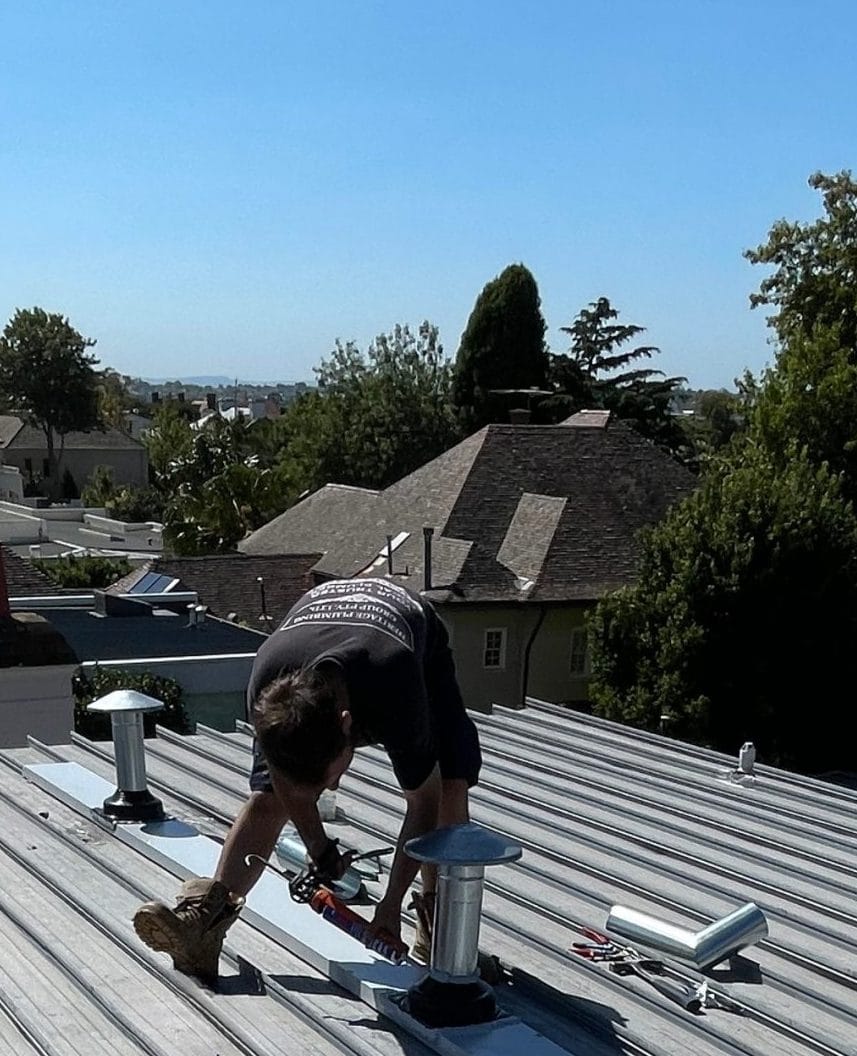
The purpose of a roof cowl is to provide a protected external termination point for exhaust air. Depending on the system, the cowl helps discharge air outdoors while limiting the amount of rain and debris that can enter through the opening when the system is not operating. Different exhaust applications can require different outlet arrangements, which is why we do not treat every roof vent or cowl as interchangeable. A bathroom exhaust, domestic rangehood and larger commercial extraction system can all be moving different types and volumes of air, and the roof-side termination needs to suit the system it is connected to.
Before installing a new roof cowl, we look at what the duct is serving, the size and route of the ductwork, the roof profile and the most sensible place for the air to discharge. Positioning matters because the outlet needs to release air outside without creating unnecessary problems for other openings, roof-mounted equipment or nearby building areas. Existing skylights, vents, solar panels, plant equipment, windows and other roof penetrations may all affect where a new outlet can be located. The duct route below the roof also needs to line up with the proposed position so the system is not left with an awkward final bend simply to reach a convenient spot on the roof.
Roof penetrations need to be treated as part of the roofing system, not as an afterthought. Cutting an opening through metal roofing, Colorbond sheets, tiles or another roof material changes the way water moves across that section of the roof. The cowl or duct outlet needs to be properly flashed and weatherproofed so rainwater can continue to drain around the penetration without finding a path into the building. Our roof plumbers consider the roof pitch, roofing profile, surrounding flashings and drainage before fitting the outlet. The aim is to create a clean termination for the ventilation system while keeping the roof watertight.
Roof cowls are commonly used with bathroom, laundry and kitchen exhaust systems, but they can also form part of ventilation in commercial kitchens, workshops, amenities and other commercial or industrial spaces. The requirements can be very different between these environments. A small residential exhaust duct does not have the same demands as a larger system operating for long periods in a commercial building. Where specialised mechanical extraction, grease-laden air, fumes or other specific exhaust conditions are involved, the system may require additional design or trade input beyond general roof plumbing. We focus on the roof-side installation and make sure the duct outlet, penetration, flashing and surrounding roofing are dealt with properly.
Existing roof cowls and duct outlets can deteriorate over time. Weather, UV exposure, movement in the roof, corrosion, storm damage and previous repairs can all affect the condition of a roof-mounted vent. Cowls can become loose or damaged, external components can deteriorate and old sealants or flashing details can fail. Sometimes the ventilation system may still be working inside the building while the roof penetration above it has started causing trouble. Water staining around a ceiling, visible deterioration near a roof outlet or movement in a cowl during windy weather can all be reasons to inspect the installation. It is also possible for the duct connection beneath the outlet to come loose or become damaged without being obvious from ground level.
Exhaust ducting itself can develop issues between the room and the roof. Flexible duct can sag, tear, become crushed or pull away from fittings, while rigid ductwork can be affected by poor joins or changes made during renovations. If airflow from an exhaust system has dropped, steam takes longer to clear or air does not seem to be reaching the outside properly, checking the duct and roof outlet can help identify where the restriction or damage is occurring. Replacing the fan is not always the answer if the problem is actually further along the duct run. We prefer to look at the visible parts of the system together rather than changing one component without considering what it connects to.
Roof cowl replacement can often be carried out without replacing an entire exhaust system when the ductwork and fan are still suitable. If the external component has been damaged or has reached the end of its useful condition, we can assess the surrounding penetration and determine what needs to be changed on the roof side. In other situations, damage to the flashing, duct connection or surrounding roof may mean more than the cowl itself needs attention. The condition of the roof should guide the repair rather than simply fitting a new cap over an existing problem. This is particularly important if there has already been leaking around the penetration.
Roof cowls and exhaust ducts can also be installed or upgraded during renovations, roof replacements and larger roofing projects. If a bathroom, laundry or kitchen is being renovated, it makes sense to check where the existing exhaust terminates before the work is finished. Older properties sometimes have ducting that stops inside the roof cavity rather than continuing to a suitable external outlet. In these cases, the roof side of the exhaust arrangement may need to be upgraded so the air has a proper path outside. During re-roofing work, existing cowls and penetrations can also be inspected while the surrounding roofing is accessible, which gives us an opportunity to replace deteriorated components or improve old flashing details before the new roof work is completed.
Rangehood exhaust is another area where the roof outlet needs careful consideration. Cooking exhaust can carry heat, steam, odours and residue, and the ducting and termination need to suit the rangehood and its installation requirements. The shortest possible route is not always available, particularly in existing homes, but unnecessary bends and restrictions should still be avoided where practical. If a rangehood is being replaced with a different appliance, the existing duct size, route and roof outlet may also need to be checked rather than assuming the old setup will suit the new unit. The same principle applies when kitchens are relocated or extended during renovation work.
Maintenance around roof vents is worth including as part of normal roof inspections, especially on commercial properties with a large number of penetrations. Leaves, debris, corrosion, physical damage and ageing flashings can all affect roof-mounted outlets over time. Checking these areas while other roof maintenance is being carried out can help pick up problems before they develop into larger water-entry issues. For exhaust systems that operate frequently, the duct outlet may also need more regular attention depending on what type of air is being discharged through it.
The right roof cowl and duct arrangement depends on the building, the exhaust source and the existing roof. There is no benefit in installing a larger or more complicated outlet than the system requires, just as there is little point using an outlet that restricts the ductwork it is connected to.
Heritage Plumbing Group approaches roof cowls and exhaust ducts from the roof plumbing side, looking at the way the duct reaches the roof, how the air is discharged and how the penetration is incorporated into the roofing.

Frequently Asked Questions
The purpose of a roof cowl is to provide a protected external termination point for exhaust air. Depending on the system, the cowl helps discharge air outdoors while limiting the amount of rain and debris that can enter through the opening when the system is not operating.
Roof cowls are commonly used with bathroom, laundry and kitchen exhaust systems, but they can also form part of ventilation in commercial kitchens, workshops, amenities and other commercial or industrial spaces.
Positioning matters because the outlet needs to release air outside without creating unnecessary problems for other openings, roof-mounted equipment or nearby building areas.
The cowl or duct outlet needs to be properly flashed and weatherproofed so rainwater can continue to drain around the penetration without finding a path into the building.
Roof cowl replacement can often be carried out without replacing an entire exhaust system when the ductwork and fan are still suitable.
Flexible duct can sag, tear, become crushed or pull away from fittings, while rigid ductwork can be affected by poor joins or changes made during renovations.
Roof cowls and exhaust ducts can also be installed or upgraded during renovations, roof replacements and larger roofing projects.
A roof cowl is not the same thing as a whirlybird, solar roof vent or ridge vent. Those products are generally used to ventilate the roof space itself, while a roof cowl or exhaust outlet is commonly connected to ductwork carrying air from a particular room, appliance or exhaust system.
Cooking exhaust can carry heat, steam, odours and residue, and the ducting and termination need to suit the rangehood and its installation requirements.
Maintenance around roof vents is worth including as part of normal roof inspections, especially on commercial properties with a large number of penetrations.


Get Started Today
Area we services
Need a reliable plumber near you? Heritage Plumbing Group offers expert solutions across Melbourne with fast response times and top-quality service.
Our licensed team brings decades of local expertise, ensuring efficient, long-lasting results for emergencies, maintenance, and major projects.
