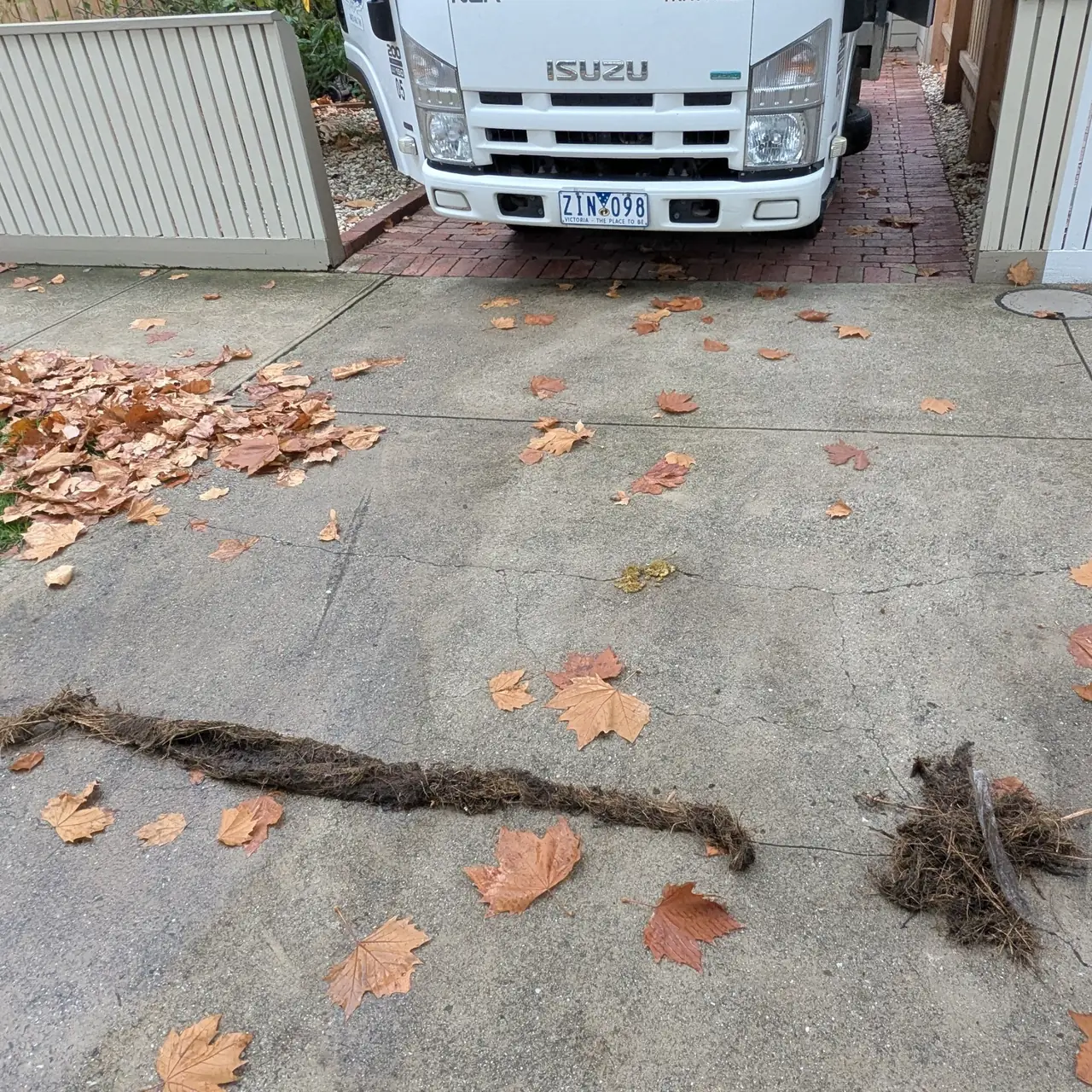
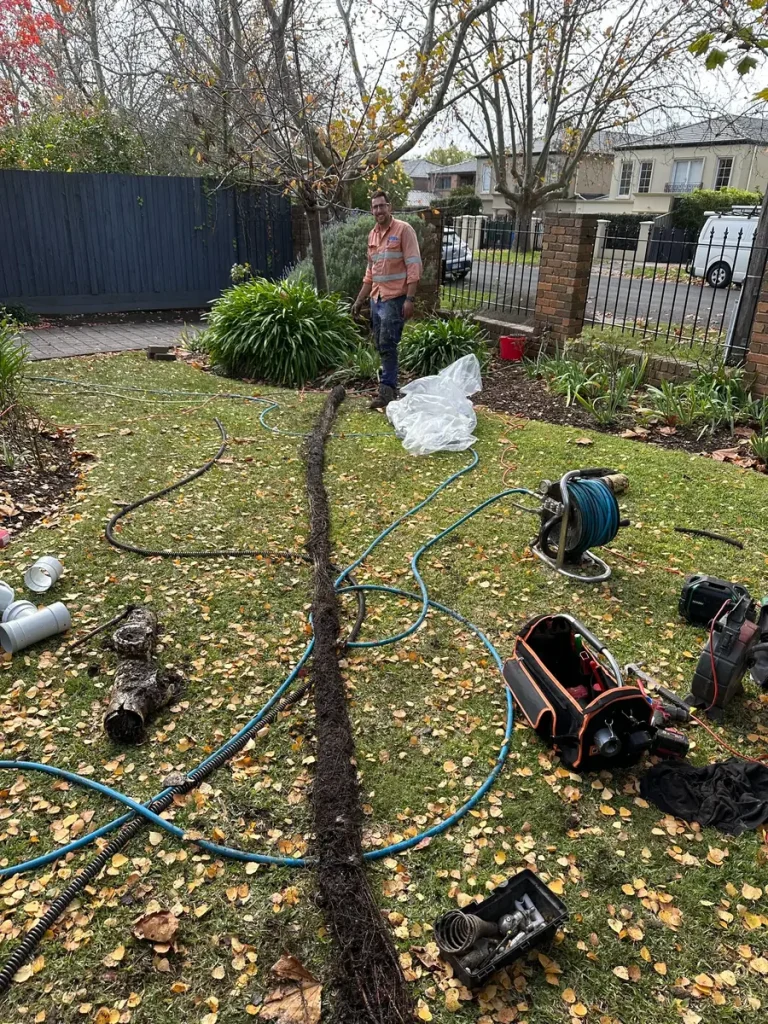
Blocked drains do not always look the same. It might be a sink that is slow to empty, a toilet that keeps rising, or an outside drain that backs up when it rains. We clear sewer and stormwater blockages across Melbourne and check further when there are signs the problem may be deeper in the line.

Blockages can form in plenty of ways. Kitchen drains commonly collect grease, fats, food scraps and soap residue. Bathroom and laundry wastes can gradually build up with hair, lint, soap, dirt and other material. Toilets can block from excess paper, wipes, sanitary products, foreign objects or a restriction further along the sewer line.
Outside the house, leaves, dirt and sediment can affect stormwater drains, while roots can find their way into older or damaged underground pipes through joints and cracks. Pipes can also move over time, develop low points, crack, collapse or lose the fall they need to drain properly. In those situations the blockage may be what gets your attention, but the pipe condition is the part that needs to be understood.

Some warning signs are easy to spot. Water taking longer than normal to disappear is one. Toilets making gurgling noises, a drain bubbling when another fixture is used, water rising in a floor waste, bad smells that keep coming back, several fixtures draining slowly at the same time or an outside gully overflowing can all tell us something about where the problem may be sitting. One blocked basin can be a local issue. A toilet, shower and floor waste all playing up together usually makes us look further down the drainage system.
Stormwater can be different again. A drain that works fine most of the year but backs up during heavy rain may have a restriction, damaged pipework, poor drainage capacity or another issue that only becomes obvious when the system is under load.
The way we clear a drain depends on what we are dealing with, the access available and where the blockage appears to be. High-pressure water jetting is commonly used for sewer and stormwater blockages because it allows us to work through grease, sludge, roots and built-up material while flushing debris through the line. Different heads and jetting methods can be used depending on the job. The aim is not just to poke a hole through the blockage. We want to restore proper flow through the drain and get enough access to assess what is going on if the job needs further investigation.
There are also times when a blockage is caused by something that has been flushed or washed into the drain and once it is properly cleared there may be no reason to take the job any further. We do not believe every blocked drain needs a camera, pipe relining or excavation. Those services have their place, but they should be used because the condition of the drain calls for them, not because they are the next item on a sales list.
CCTV drain cameras become particularly useful when a blockage has happened more than once, when roots are involved, when the drain does not clear as expected, when there are signs of structural damage or when we need to understand the condition of the pipe before recommending further work. A camera generally needs a usable path through the drain, so if the line is completely blocked we normally need to restore enough flow first. Once the camera can travel through the pipe, it can help identify root entry, cracking, displaced joints, damaged sections, foreign objects, sections holding water and other faults that may be contributing to the problem. Where footage is taken, we can explain what we are looking at rather than expecting a customer to take our word for it.
If the blockage is underground and we need to identify the position of a fault, drain locating equipment can help us trace the line and narrow down where further work may be required. That can make a big difference if a repair is needed because there is no sense digging up more of a property than necessary.
The next step depends entirely on what we find. If the pipe is sound and the blockage has been removed, there may be nothing further to do. If roots have entered through a damaged joint, clearing the roots can get the drain working again, but it does not close the opening they came through. If the pipe is cracked, badly displaced or collapsed, the repair needs to address the damaged section rather than relying on repeated cleaning.
In some situations pipe relining may be worth considering because it can repair a suitable section of drain without excavating the entire line. In other situations excavation and replacement is the more practical repair. We are comfortable recommending either option because there is no single repair that suits every drain. The condition of the pipe, the type and location of the damage, access, depth and surrounding area all affect what makes sense.
There are also jobs where relining is not suitable at all, and we would rather say that upfront than sell a method that does not properly address the fault. The same applies to excavation. If there is a sensible way to repair a pipe without digging up a large section of the property, we will consider it. If the damaged section needs to be exposed and replaced, we will explain why.
Further repairs, pipe relining, excavation or replacement work are quoted separately from the initial drain clearing service so the customer knows what they are approving before additional work goes ahead.
Our blocked drain clearing service has a set initial price for the included service period, with additional time charged if the job runs beyond that allowance. We explain what is included before the work starts and we do not hide extra repair costs inside the initial clearing price. If further work is recommended after the blockage is cleared or inspected, that is discussed and quoted separately. No hidden costs is important to us, but so is being realistic about what can and cannot be known before a drain has been assessed.
We also do not offer lifetime guarantees that a blocked drain will never block again. Drainage systems are too unpredictable for that kind of promise. A customer can have a drain professionally cleared and later have roots grow back through an unrepaired opening, another foreign object enter the line, grease build up again or a separate section of pipe fail.
We can explain what we found on the day and what we have done about it, but promising that a drain can never block again would not be fair. If an underlying pipe fault is repaired, we can stand behind the work that was actually completed within the terms that apply to that repair, but clearing a blockage and permanently guaranteeing the entire drainage system are two different things.
This is also why we are cautious about aggressive cheap-drain offers that make every job sound identical. Some blockages clear quickly. Some take more work. Some need further investigation. Others expose a damaged drain that needs a separate repair.
Price matters, and we are happy to discuss our pricing or review a comparable quote, but we do not want to win a job by promising something that cannot realistically be delivered once the plumber is on site. We would rather explain the service clearly, carry out the work properly and let the customer decide from there.
We work on blocked sewer drains, stormwater lines, toilets, kitchen sinks, bathroom wastes, showers, laundries, downpipes and other drainage problems across Melbourne.
The job might involve clearing a simple obstruction, high-pressure jetting, CCTV inspection, locating a damaged section, removing roots, repairing part of the pipe, relining a suitable section or excavating and replacing damaged drainage. The important part is that those steps happen for a reason.
We do not want a customer paying for a camera if there is nothing to investigate, and we do not want to clear the same damaged drain over and over when the footage is showing us that the pipe needs repair. That process of elimination is a big part of drain work. You clear what you can, test the flow, look at the behaviour of the system, investigate further where necessary and build the repair recommendation from what the drain is actually telling you.
It is also why photos, CCTV footage and proper explanations matter. If we are recommending a larger job such as pipe relining or excavation, we want the customer to understand why. That might mean showing where roots are entering, where a joint has moved, where a pipe has cracked or where a section is holding water.
A larger repair should make sense when it is explained, not feel like something that has been added because a plumber happened to be there. Michael and Adrian have built the business around that kind of approach. They are both tradesmen and they know customers are far more comfortable approving work when they understand what has gone wrong and what the repair is meant to achieve. Blocked drains are frustrating enough without being left wondering whether the advice is genuine.
Same-day blocked drain bookings are available across many Melbourne areas depending on the day’s workload and where our plumbers are already working.
If sewage is backing up, a toilet cannot be used, water is overflowing inside the property or stormwater is causing flooding around the building, it is worth getting the problem looked at sooner rather than waiting for it to become a larger clean-up. Where sewage is involved, avoiding unnecessary contact with the water is sensible until the source has been dealt with.

Frequently Asked Questions
If a blockage appears to be outside the private drainage system, responsibility can also depend on where the problem is located. Some drainage belongs to the property owner and some parts of the wider sewer or stormwater network can fall under a water authority or council. We do not assume every blockage automatically belongs to the customer. If the signs suggest the problem may be outside the property’s pipework, we can explain what we have found and what the next step may be.
For smaller blockages, people often try a plunger, hot water or a supermarket drain product before calling a plumber. Sometimes that helps. Other times it only moves a small amount of material and the drain blocks again.
We are particularly careful with strong chemical drain cleaners because the product may not suit the pipework, may not reach the actual blockage and can make the working area unpleasant or unsafe for the plumber who later has to open the drain.
If several fixtures are affected, the blockage keeps returning, there is sewage backing up, the drain is making noises or water is appearing somewhere it should not, that is normally the point where guessing stops being useful.
The same goes for drains that have already been cleared more than once. Repeated blockages are one of the clearest reasons to look beyond the immediate obstruction and check whether the line itself has a problem.
Our job is to get the drain working, investigate the cause when needed and give you enough information to make a sensible decision about what happens next. Sometimes that means we clear it and leave. Sometimes it means monitoring the drain and seeing whether the problem returns.
Sometimes the evidence points to pipe relining. Sometimes the better repair is an excavation and replacement. There are also times where a customer has been told they need a major repair and our inspection shows something simpler. That is exactly why we prefer to inspect the actual problem rather than start with a predetermined answer.
Preventing every future blockage is not realistic, but there are simple things that can reduce unnecessary problems. Cooking fats and oils should be kept out of kitchen drains, wipes should not be treated as harmless just because they are labelled flushable, and outside pits and grates should be kept reasonably free of leaves and debris.
If there are trees near older underground drainage, it is also worth taking recurring root problems seriously rather than assuming each blockage is unrelated. A drain that repeatedly blocks in the same area is usually giving you useful information. The earlier that information is investigated, the easier it is to make a considered decision before the problem becomes a larger failure.
That is what we want this service to be about. Not just clearing water so we can pack up and leave, but knowing when the job is finished and knowing when there is something underneath it that deserves a closer look.


Area we services
Need a reliable plumber near you? Heritage Plumbing Group offers expert solutions across Melbourne with fast response times and top-quality service.
Our licensed team brings decades of local expertise, ensuring efficient, long-lasting results for emergencies, maintenance, and major projects.