Heritage Plumbing Group carries out hot water service repairs, hot water installation work and hot water system replacement across Melbourne for homes, businesses and commercial properties. We work on gas, electric, heat pump, solar, storage and instantaneous or continuous flow systems.
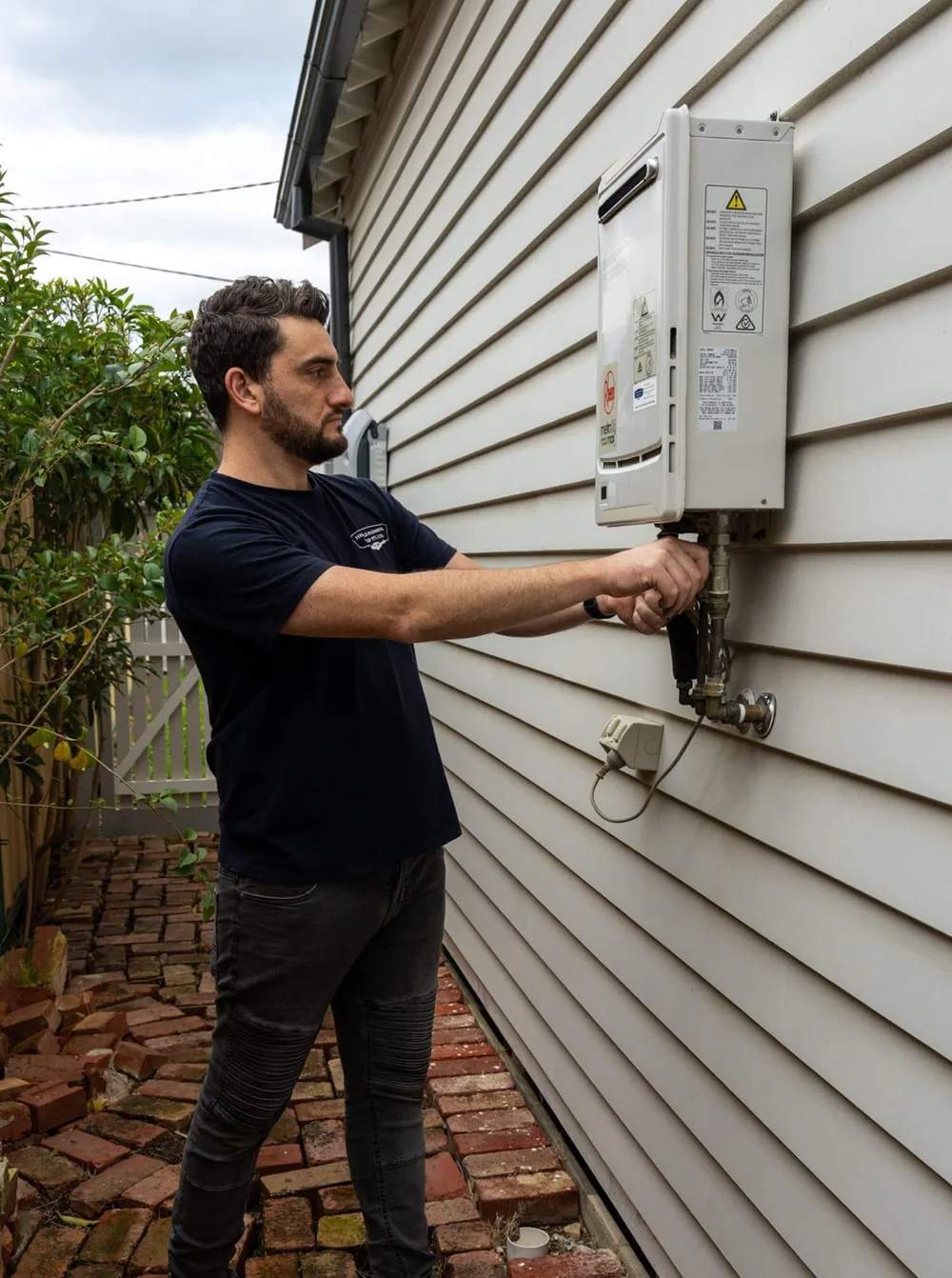
Hot water system installation also needs a bit more thought than simply choosing a unit and connecting it to the existing pipes. The number of people using the property, how much hot water is normally required, the space available for the unit, existing water pipework, gas supply, electrical requirements and access can all affect what is suitable.
A replacement heater does not always need to be the same type or capacity as the old one, particularly if the building has changed, more people are using the property or the old unit was never well suited to the demand in the first place. On the other hand, there is no point making a straightforward hot water replacement more complicated than it needs to be when the existing arrangement still works well. We look at both sides of that before recommending what should happen next.
Gas hot water systems are still found throughout Melbourne and can include storage units as well as continuous flow systems. A gas unit needs the gas supply, water flow, location and installation requirements to suit the appliance being fitted. If there is a gas-related fault or the system is being changed, the surrounding gas plumbing and safety requirements also need to be taken into account.
Electric hot water systems are another common setup and can suit properties where the available services, storage space and expected hot water use line up with the unit. Problems with electric storage systems can involve heating elements, thermostats, valves or the tank itself, so a loss of hot water does not always mean the whole unit has failed.
Heat pump hot water systems are becoming more common for Melbourne properties considering a replacement, but they still need to be selected and installed around the actual site. The available space, position of the unit, household demand and electrical requirements matter, and a heat pump should not be treated as a one-size-fits-all replacement for every property.
Solar hot water can also be an option where the site and existing arrangement make sense for it. The condition of the solar components, storage tank and boosting arrangement all form part of working out whether a repair, service or replacement is worthwhile.
Instantaneous and continuous flow hot water systems heat water as it is needed rather than storing a full tank of heated water. They can work well in the right property, but sizing still matters. Water flow, gas supply where applicable, the number of outlets likely to be used and where the unit can be installed all have to be considered. A unit that is too small for the way a household or business uses hot water can still leave people frustrated even though the system itself is technically working.
Storage hot water systems come with a different set of things to look at. Tanks can develop leaks, corrosion, pressure issues or changes in heating performance over time. Some faults can be repaired separately from the tank, while other signs can point to a unit that is reaching the stage where replacement is the more sensible long-term choice. Repeated repair bills on an older storage tank can add up quickly, but age on its own is not enough reason for us to tell someone to replace a system that is otherwise in reasonable condition.
Hot water temperature control is another part of the installation that needs to be right. Tempering valves and thermostatic mixing valves are used in different situations to control the temperature of water being delivered to outlets, and where they are required they need to be installed, tested and maintained correctly.
Victorian plumbing requirements and Building and Plumbing Commission guidance form part of how this work is approached. Temperature problems can also come from other parts of the hot water system, so changing a valve without checking the broader setup is not always the answer.
We also carry out hot water service repairs where the heater itself is still serviceable but one part of the system has stopped doing its job properly. Heating elements, thermostats, valves, pressure controls and temperature control components can all affect performance, and the fault-finding process changes depending on whether we are looking at a gas unit, an electric storage system, a heat pump, solar hot water or a continuous flow system.
That is one reason we avoid making blanket statements about what a particular symptom means. The same complaint from two customers can have completely different causes once the systems are checked.
Hot water servicing also depends on what has actually been installed. Different manufacturers and different types of systems have their own servicing and maintenance requirements, so we do not apply one fixed maintenance interval to every heater in Melbourne.
A unit that has started behaving differently, has developed a leak, is struggling to keep temperature or has had several faults is worth checking before it reaches the point where there is no hot water at all. Regular attention can also help pick up valves, controls or other components that are no longer operating the way they should.
Commercial hot water work can be more involved because the demand is often higher and a failure can affect more people or interrupt the way a site operates. Schools, hospitality venues, workplaces, industrial properties and other commercial buildings may use multiple heaters, circulating pipework, larger storage capacity or commercial hot water banks to keep up with demand.
In those situations we look at the wider commercial plumbing arrangement, not just one heater on its own. Recovery time, storage capacity, redundancy, access for future servicing and how the building uses hot water all become important when planning repairs or replacement work. If one unit in a bank fails, replacing it without considering the condition and capacity of the rest of the system can leave the original problem only partly resolved.
When a hot water system replacement is needed, we can assess the current setup and talk through the practical choices for the property. Sometimes that means a reasonably simple changeover. Other jobs need alterations to pipework, valves, gas services, electrical requirements or the position of the new system.
We also consider whether the capacity still suits the property rather than assuming the old unit should simply be copied. For a growing household, a renovated building or a business whose hot water use has changed, replacing like for like may not give the best result. The same applies in the other direction. There is little benefit in installing more capacity than a property realistically needs.
Hot water installation work should leave enough thought for future servicing as well. A system squeezed into an awkward position may technically fit, but poor access can make maintenance and repairs unnecessarily difficult later on. We take the existing services, clearances, pipework and practical access into account before the new unit goes in.
The plumbing around the heater matters just as much as the appliance itself because an otherwise suitable system can still perform poorly if the installation around it is not right.
Leaks around a hot water unit also need to be traced properly. Water on the ground near a heater does not always tell us immediately where it is coming from. The tank, valves, connections, relief pipework or nearby plumbing can all be possible sources depending on the setup.
Where broader leak detection and repairs are needed, we can look beyond the heater rather than assuming the hot water unit is responsible for every sign of water nearby.
Choosing the right hot water system is really about matching the equipment to the property rather than chasing whichever option is being promoted at the time. Gas, electric, heat pump, solar, storage and continuous flow systems all have situations where they make sense. The right choice depends on the building, the services available, the expected demand and what the customer wants from the system over the coming years.
We are not interested in pushing the same type of heater into every property. A good result is a hot water system that can keep up with normal use, has been installed properly and can be maintained without creating unnecessary headaches later.
Whether the call is for hot water repairs in Melbourne, a new hot water installation, a hot water service that has stopped heating properly or an older system that is becoming unreliable, we start with the condition of the existing setup and work from there. Some jobs end with a small repair and others need a full replacement. Commercial sites can need a broader review of the hot water bank or circulating system, while residential properties may simply need a heater that better suits the household. The important part is understanding the cause before spending money on the wrong fix.
We would rather inspect the job properly and explain what we find than tell someone over the phone that they need a new heater based on one symptom. For customers looking for a hot water plumber in Melbourne, that means the advice can be based on the system in front of us rather than a guess about what may have failed.
Frequently Asked Questions
Hot water systems across Melbourne can fail in plenty of different ways, and the first sign is not always a completely cold shower. Sometimes the water takes longer to heat, the temperature changes while it is running, the supply does not last as long as it used to, the unit begins leaking or a system that has been fairly quiet starts making noises.
A faulty hot water system does not automatically mean the entire unit has to come out. Depending on the type and condition of the system, the issue may be connected to a thermostat, heating element, valve, pressure problem, temperature control component or another part of the existing setup. There are also times when repairs start becoming less practical because of the age of the unit, corrosion, repeated faults or the general condition of the system.
The number of people using the property, how much hot water is normally required, the space available for the unit, existing water pipework, gas supply, electrical requirements and access can all affect what is suitable. A replacement heater does not always need to be the same type or capacity as the old one, particularly if the building has changed, more people are using the property or the old unit was never well suited to the demand in the first place.
Gas hot water systems are still found throughout Melbourne and can include storage units as well as continuous flow systems. Electric hot water systems are another common setup and can suit properties where the available services, storage space and expected hot water use line up with the unit.
Heat pump hot water systems are becoming more common for Melbourne properties considering a replacement, but they still need to be selected and installed around the actual site. The available space, position of the unit, household demand and electrical requirements matter, and a heat pump should not be treated as a one-size-fits-all replacement for every property.
Instantaneous and continuous flow hot water systems heat water as it is needed rather than storing a full tank of heated water. They can work well in the right property, but sizing still matters. Water flow, gas supply where applicable, the number of outlets likely to be used and where the unit can be installed all have to be considered.
Storage hot water systems come with a different set of things to look at. Tanks can develop leaks, corrosion, pressure issues or changes in heating performance over time. Some faults can be repaired separately from the tank, while other signs can point to a unit that is reaching the stage where replacement is the more sensible long-term choice.
Tempering valves and thermostatic mixing valves are used in different situations to control the temperature of water being delivered to outlets, and where they are required they need to be installed, tested and maintained correctly. Victorian plumbing requirements and Building and Plumbing Commission guidance form part of how this work is approached.
Commercial hot water work can be more involved because the demand is often higher and a failure can affect more people or interrupt the way a site operates. Schools, hospitality venues, workplaces, industrial properties and other commercial buildings may use multiple heaters, circulating pipework, larger storage capacity or commercial hot water banks to keep up with demand.
Hot water servicing also depends on what has actually been installed. Different manufacturers and different types of systems have their own servicing and maintenance requirements, so we do not apply one fixed maintenance interval to every heater in Melbourne. A unit that has started behaving differently, has developed a leak, is struggling to keep temperature or has had several faults is worth checking before it reaches the point where there is no hot water at all.


Area we services
Need a reliable plumber near you? Heritage Plumbing Group offers expert solutions across Melbourne with fast response times and top-quality service.
Our licensed team brings decades of local expertise, ensuring efficient, long-lasting results for emergencies, maintenance, and major projects.
