Every site is different. A restaurant kitchen can have several gas appliances operating at the same time, while a warehouse, workshop, school or commercial tenancy may only need gas supplied to selected equipment or plant. Before new pipework is installed, we look at the proposed appliances, the building layout, the existing gas service where one is already in place and how the new line can be run without creating unnecessary problems for the property or other trades.
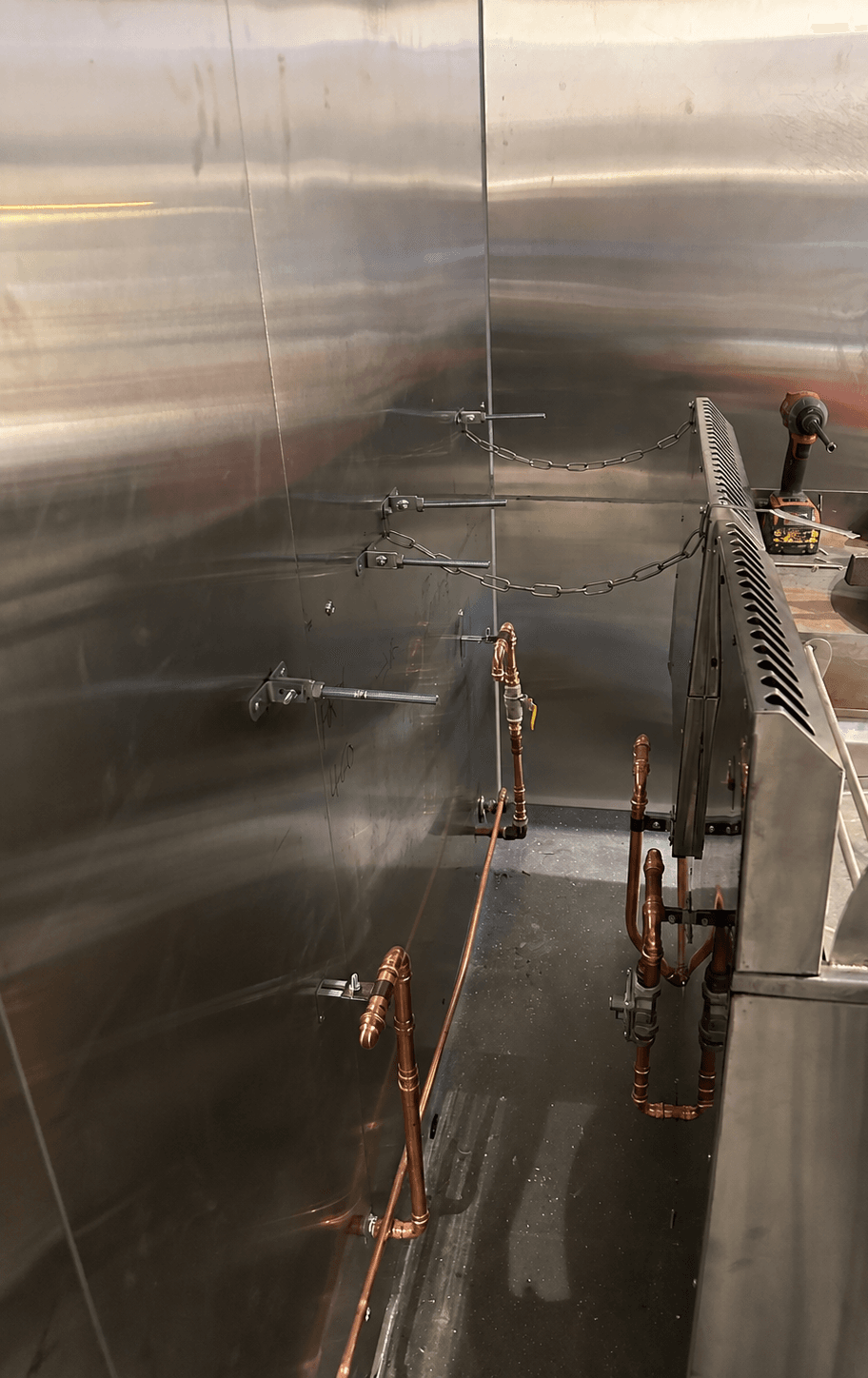
The pipe route is an important part of the job because commercial buildings often have more services to work around than a typical home. Electrical cabling, hydraulic services, mechanical equipment, ceilings, structural elements and existing plant can all affect where gas pipework can reasonably go. New builds generally offer more flexibility because the gas line can be coordinated with the rest of the services while the building is still being constructed. Existing commercial properties can require more planning, particularly where ceilings are finished, plant rooms are crowded or the business needs to remain operational while work is being carried out.
Commercial gas systems also need to be sized around the demand being placed on them. Adding another appliance to an existing line does not automatically mean the existing pipework is suitable for the extra load. The type of equipment, distance from the gas supply and the number of appliances operating together can all affect what is required. We look at the existing setup and the proposed changes before deciding how the new gas line should be connected.
Where the existing service is not suitable for the planned installation, that needs to be identified before the new equipment is connected.
Commercial kitchens are a common area where gas line installation and alterations are required. Restaurants, cafes, bars and food preparation facilities can use gas for cooktops, ovens, fryers, grills, hot water systems and other equipment, often with several appliances operating during busy periods. Kitchen layouts also change over time as equipment is replaced or the tenancy is renovated.
When a commercial kitchen is being fitted out or altered, gas pipework needs to suit the actual equipment layout rather than being positioned without considering how the kitchen will be used. Access for isolation valves, servicing and future equipment changes should also be considered during the installation.
Warehouses, factories and workshops can have very different gas requirements. Gas may be used for heating, production equipment, process plant, hot water or specialised machinery. These sites can involve longer pipe runs, larger buildings and areas where the pipework is exposed to vehicles, equipment or outdoor conditions. The installation needs to suit the environment and the way the site operates. Where gas lines pass through external areas or around industrial equipment, the route and level of protection need to be considered as part of the job rather than treated as an afterthought.
Retail stores, offices, schools and other commercial buildings can also require gas lines for heating, hot water, cooking or specialised equipment. In these properties, work often needs to be coordinated around tenants, staff, customers or other trades. We plan the plumbing side of the installation around the available access and project requirements, particularly where the work forms part of a renovation, tenancy fit-out or larger building upgrade.
Existing commercial gas pipework may need to be altered when equipment is moved, a tenancy changes use or the building layout is modified. Before extending or changing an existing system, we need to understand what is already there. Older pipework can have previous alterations, redundant branches or sections that are difficult to trace without inspection. In some buildings, the gas system has been changed several times as different tenants have occupied the property. We prefer to work from what can actually be confirmed rather than assuming the existing pipework is suitable simply because gas is already available on site.
Testing is an important part of gas work. Existing gas systems may need to be tested before alterations are carried out so problems already present in the system can be identified separately from the new work. Once installation or alteration work is completed, the relevant sections need to be checked as part of commissioning the gas system. If an existing leak or fault is identified outside the original scope, it needs to be dealt with properly rather than ignored while new pipework is connected to the same system.
Commercial gas line work can also involve gas meters, regulators and the connection between the available gas supply and the internal consumer piping. Changes to appliance demand or building use can sometimes mean the existing gas supply arrangement needs further investigation before additional equipment is connected. On larger commercial or industrial projects, this can involve coordination with other contractors, consultants or the gas authority depending on the nature of the work. Our role is to carry out the gas plumbing within our scope and make sure the pipework we install works with the approved arrangement for the property.
Isolation is another practical consideration in commercial gas installations. A well-planned system should allow equipment or sections of the gas service to be isolated where appropriate without making future maintenance more difficult than it needs to be. The location of valves and accessible connection points can make a significant difference when appliances are serviced, replaced or removed later. This is particularly useful in busy commercial kitchens and industrial sites where shutting down more of the building than necessary can create avoidable disruption.
Renovations and fit-outs are a good time to review existing gas lines because walls, ceilings and service areas may already be open while other work is taking place. Planning the gas installation at this stage can make it easier to choose a practical pipe route and coordinate with the electrical, mechanical and hydraulic services before finishes are completed. Leaving gas alterations until late in the project can mean working around finished surfaces or changing other completed work to create access.
Commercial gas lines may also need to be extended as a business grows. A warehouse may add heating to another area, a restaurant may install extra cooking equipment or a commercial property may be divided into new tenancies. In these situations, the existing system needs to be considered as part of the expansion rather than treating the new gas line as a completely separate piece of pipework. We assess how the additional connection fits into the existing system and whether the proposed arrangement makes sense for the building.
Replacement of old or damaged gas pipework can form part of the same work. Corrosion, physical damage, previous alterations or leaks can sometimes mean a section of the existing line is better replaced than repaired repeatedly. The extent of replacement depends on the condition of the pipework and where the problem is located. Some sites only require a localised section changed, while others may need a broader upgrade if the existing system no longer suits the property.
Heritage Plumbing Group works across commercial properties where gas installations need to fit around real operating conditions. That can mean staging work around business hours, coordinating with builders and other trades, or planning the installation so access remains practical for future maintenance. We focus on the gas plumbing side of the project and make sure the pipework, valves and connections are installed in a way that suits the building and the equipment being supplied.
For Melbourne commercial properties needing a new gas line, an extension to an existing service, gas pipework for a fit-out or changes to suit new equipment, we can assess the plumbing requirements, work from the available plans and site conditions, and carry out the installation with the wider gas system in mind.

Frequently Asked Questions
Before new pipework is installed, we look at the proposed appliances, the building layout, the existing gas service where one is already in place and how the new line can be run without creating unnecessary problems for the property or other trades.
Adding another appliance to an existing line does not automatically mean the existing pipework is suitable for the extra load. The type of equipment, distance from the gas supply and the number of appliances operating together can all affect what is required.
Commercial kitchens are a common area where gas line installation and alterations are required. Restaurants, cafes, bars and food preparation facilities can use gas for cooktops, ovens, fryers, grills, hot water systems and other equipment, often with several appliances operating during busy periods.
Warehouses, factories and workshops can have very different gas requirements. Gas may be used for heating, production equipment, process plant, hot water or specialised machinery.
Existing commercial gas pipework may need to be altered when equipment is moved, a tenancy changes use or the building layout is modified.
Existing gas systems may need to be tested before alterations are carried out so problems already present in the system can be identified separately from the new work.
Changes to appliance demand or building use can sometimes mean the existing gas supply arrangement needs further investigation before additional equipment is connected.
Renovations and fit-outs are a good time to review existing gas lines because walls, ceilings and service areas may already be open while other work is taking place.
Commercial gas lines may also need to be extended as a business grows. A warehouse may add heating to another area, a restaurant may install extra cooking equipment or a commercial property may be divided into new tenancies.
Replacement of old or damaged gas pipework can form part of the same work. Corrosion, physical damage, previous alterations or leaks can sometimes mean a section of the existing line is better replaced than repaired repeatedly.


Get Started Today
Area we services
Need a reliable plumber near you? Heritage Plumbing Group offers expert solutions across Melbourne with fast response times and top-quality service.
Our licensed team brings decades of local expertise, ensuring efficient, long-lasting results for emergencies, maintenance, and major projects.
