Heritage Plumbing Group carries out fire hydrant installation work across Melbourne for commercial, industrial, public and larger residential properties, working with builders, facility teams, consultants and other trades where required. A hydrant system has to provide suitable access to water for firefighting, so the position of hydrants, pipework, valves, pumps, boosters and connections all need to line up with the project design and the requirements that apply to the building.
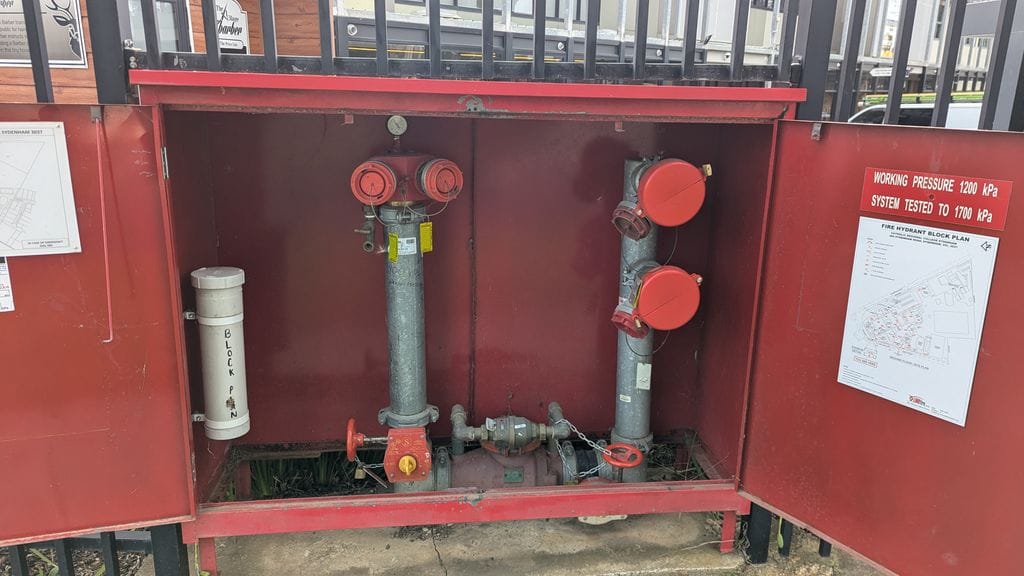
Before installation starts, we review the available plans, proposed service layout, site access and the existing infrastructure where the new system is connecting into something already on the property. New builds can allow the fire service to be planned alongside the rest of the hydraulic work, while existing buildings can be more complicated because the available route may already be crowded with electrical, mechanical, structural and plumbing services.
The way the hydrant pipework is run matters because it still needs to be practical to install, accessible where required and coordinated with the rest of the building. Underground sections may involve excavation and connection work before the service enters the building, while above-ground pipework may need to travel through plant areas, car parks, risers, service corridors or other parts of the property before reaching the required hydrant points.
On commercial and industrial sites, the distances involved can be much greater than on smaller buildings, so the system has to be approached as part of the wider fire service rather than simply installing individual hydrants in isolation.
The available water supply is another important part of the job. Some properties can connect to an existing service that is suitable for the planned system, while others may require additional infrastructure, booster arrangements, pumps or other equipment as part of the overall design. Those requirements are determined by the project documentation and the relevant fire and hydraulic design rather than guessed on site. Our role is to install the plumbing components within our scope properly and coordinate the work with the other people involved in delivering the fire service.
Existing buildings may need hydrant upgrades because the property has been extended, renovated or changed from its original use. A tenancy fit-out, warehouse expansion or new section of a facility can alter what is required from the existing fire service. In these situations, the condition and layout of the current pipework need to be understood before new sections are added. Old valves, corroded pipework, previous alterations or undocumented changes can affect how straightforward the upgrade will be, so we prefer to identify those issues early rather than discovering them once new work is already underway.
Fire hydrant installations also need careful coordination around penetrations and building finishes. Pipework passing through walls, floors or external areas needs to be planned so it can reach the required locations without creating unnecessary clashes or leaving difficult access for future maintenance. Where roof, wall or slab penetrations form part of the work, the surrounding construction and other services need to be considered before anything is opened up. On larger projects, this coordination can involve working alongside structural, electrical, mechanical, fire protection and civil contractors so each service has the space it needs.
Hydrant systems are often part of a larger package of fire service work that may also include hose reels, fire service connections, booster assemblies, pumps or associated water infrastructure. Even when the job is limited to hydrant installation, it still needs to fit into that broader system properly. A hydrant point is only useful when the water supply, pipework and associated components behind it are doing what the system design requires.
Installation quality is important because fire service pipework can remain in place for many years and needs to be accessible for testing, maintenance and future upgrades. Supports, valves, pipe routes and connection points should be installed neatly and in sensible locations rather than creating avoidable problems for the people who need to service the system later. Commercial and industrial sites can also have areas where pipework is exposed to traffic, machinery, weather or other site conditions, so the installation needs to suit the environment it is being placed in.
Installation quality is important because fire service pipework can remain in place for many years and needs to be accessible for testing, maintenance and future upgrades. Supports, valves, pipe routes and connection points should be installed neatly and in sensible locations rather than creating avoidable problems for the people who need to service the system later. Commercial and industrial sites can also have areas where pipework is exposed to traffic, machinery, weather or other site conditions, so the installation needs to suit the environment it is being placed in.
Schools, warehouses, factories, shopping centres, public buildings and larger commercial facilities can all have different site conditions even though they may require the same general type of fire hydrant service. A school may need work staged around occupied areas, while a warehouse can involve long pipe runs across a large building. Industrial properties may have plant, production areas or external yards that affect where services can be installed. Public and institutional buildings can also require additional coordination because work may need to fit around other contractors, building operations or programmed shutdowns.
Heritage Plumbing Group approaches each fire hydrant installation around the actual property and project documentation rather than assuming the same layout will suit every site.
Where existing hydrants or fire service pipework are being replaced, we assess what is visible and confirm the intended scope before removing components. Corrosion, damaged valves, leaking pipework or previous alterations can sometimes be found once an older system is opened up. If additional work becomes necessary, it is better to identify the issue and explain what has been found than to cover it up and continue with a system that may still have a problem elsewhere.
Testing and commissioning form part of completing fire service work, with the exact requirements depending on the project and the system being installed. The finished installation needs to be checked before it is handed over, and any required testing or coordination with other contractors should be completed as part of the project process. Where specialist fire engineering, electrical or other work sits outside our plumbing scope, those parts need to be completed by the appropriate qualified trade or consultant. The same applies when a project includes pumps, controls or other equipment that forms part of the wider fire service system.
Fire hydrant installation also benefits from being considered early in a project. Leaving the fire service until late in construction can create unnecessary clashes with finished walls, ceilings, paving, structural work or other services. When the hydrant pipework is coordinated at the right stage, there is usually more flexibility to choose practical routes and avoid reworking completed areas. This is particularly useful on commercial builds, warehouse developments, refurbishments and institutional projects where several trades are working in the same spaces.
For Melbourne properties requiring a new fire hydrant system, additional hydrant coverage or changes to an existing fire service, we can review the plumbing scope, work from the project design and carry out the installation with the wider building and fire service in mind.
The aim is to leave the property with a well-planned installation that suits the site, coordinates with the other services and is ready for the testing, maintenance and ongoing requirements that apply to the completed system.

Frequently Asked Questions
Before installation starts, we review the available plans, proposed service layout, site access and the existing infrastructure where the new system is connecting into something already on the property.
Existing buildings may need hydrant upgrades because the property has been extended, renovated or changed from its original use.
The way the hydrant pipework is run matters because it still needs to be practical to install, accessible where required and coordinated with the rest of the building.
Underground sections may involve excavation and connection work before the service enters the building, while above-ground pipework may need to travel through plant areas, car parks, risers, service corridors or other parts of the property before reaching the required hydrant points.
The available water supply is another important part of the job. Some properties can connect to an existing service that is suitable for the planned system, while others may require additional infrastructure, booster arrangements, pumps or other equipment as part of the overall design.
Hydrant systems are often part of a larger package of fire service work that may also include hose reels, fire service connections, booster assemblies, pumps or associated water infrastructure.
Schools, warehouses, factories, shopping centres, public buildings and larger commercial facilities can all have different site conditions even though they may require the same general type of fire hydrant service.
Where existing hydrants or fire service pipework are being replaced, we assess what is visible and confirm the intended scope before removing components.
Testing and commissioning form part of completing fire service work, with the exact requirements depending on the project and the system being installed.
Fire hydrant installation also benefits from being considered early in a project. Leaving the fire service until late in construction can create unnecessary clashes with finished walls, ceilings, paving, structural work or other services.


Get Started Today
Area we services
Need a reliable plumber near you? Heritage Plumbing Group offers expert solutions across Melbourne with fast response times and top-quality service.
Our licensed team brings decades of local expertise, ensuring efficient, long-lasting results for emergencies, maintenance, and major projects.
